
In this article, you’ll learn:
- What natto the food actually contains — and why a supplement pulls out only one piece of that
- What “FU” means, and why it matters more than milligrams
- How to decide which approach makes sense for your situation
- What 2025 independent supplement testing revealed — and how to shop smarter
This post contains affiliate links. If you purchase through my links, I may earn a small commission at no extra cost to you. I only recommend products I genuinely use or have thoroughly researched.
Quick-Reference Comparison
| Natto (food) | Nattokinase supplement | |
|---|---|---|
| Best for | Gut microbiome, overall nutrition, bone support | Standardized enzyme dosing, those avoiding vitamin K2 |
| Nattokinase content | ~1,400–2,000 FU per 50g serving (varies by brand) | Labeled FU (look for third-party verified brands) |
| Vitamin K2 | High — may interfere with warfarin | Removed in quality supplements |
| Probiotic benefit | Yes — Bacillus subtilis natto | No |
| Soy content | Yes | Yes (most products) |
| Who should avoid | Those on warfarin or blood thinners | Those on blood thinners or blood pressure meds — consult your doctor first |
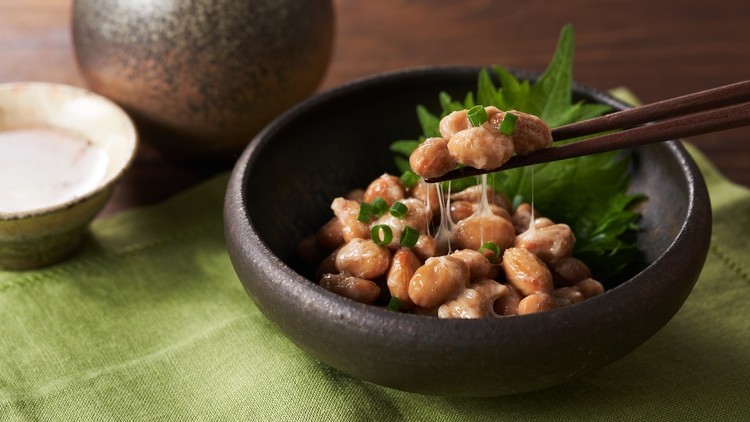
I have eaten natto almost every morning for years. Not as a health intervention. Just because it was there — a small styrofoam tray in the refrigerator, sticky and sharp-smelling, ready in ninety seconds with mustard and soy sauce over rice that had cooled slightly on the counter.
I thought about this when I started seeing nattokinase supplements appear in wellness content — clean packaging, confident claims, promising the benefits of natto in a single tablet. And I kept thinking: is that actually what natto is?
The answer is no. And yes. It depends on what you’re trying to do.
Key takeaways before we go further: the food and the supplement are genuinely different things. A supplement delivers one enzyme at a standardized dose. Natto delivers that enzyme plus a whole matrix of compounds that no capsule contains. Neither is wrong — they just answer different questions.
What Natto and Nattokinase Actually Are
Natto is steamed soybeans fermented with Bacillus subtilis var. natto. The fermentation creates compounds the plain soybean doesn’t contain: nattokinase, high concentrations of vitamin K2, polyglutamic acid that may slow sugar absorption, and a probiotic bacterial strain that some research suggests supports gut microbiome diversity.
One trial found that four weeks of daily natto consumption led to significant reductions in bowel discomfort. A separate study found higher bifidobacteria counts in participants who ate one package daily compared to a control group. Natto isn’t a delivery vehicle for one enzyme. It’s a whole food.
Nattokinase is the fibrinolytic enzyme produced during fermentation — the compound that breaks down fibrin, the protein mesh that forms blood clots. Since the 1980s, it has been studied primarily in supplement form, not as a food. This matters: the clinical trials showing blood pressure effects used purified supplements. The population data linking natto to lower cardiovascular mortality comes from observational studies of people eating the food. These are different kinds of evidence. They can’t be swapped.
The cultural context underneath
養生 (yōjō) is a Japanese concept that roughly means caring for the body through accumulated daily habit rather than targeted intervention. When my neighbors eat natto in the morning, they aren’t supplementing. They aren’t managing a condition. They’re continuing a practice that their grandparents continued — because consistency over years is its own form of medicine.
The supplement extracts one compound and standardizes it. That has real value. But it’s worth being honest about what you’re choosing and why.
What the Evidence Actually Shows
Some research suggests nattokinase may support healthy blood pressure. One randomized trial found that participants taking 2,000 FU daily saw a meaningful reduction in systolic blood pressure over eight weeks, though results varied. A review of multiple trials found similar patterns, though overall the clinical evidence remains limited — fewer than ten rigorously controlled studies have been published.
This is why I default to the food when I can. I can’t point to a trial for my own digestion, but I know what a daily serving of natto has done for mine over years of consistency. Research is one kind of evidence. Lived experience is another.
What “FU” means and why it matters more than milligrams
Fibrinolytic units measure how much enzyme activity a supplement actually contains — how well it dissolves fibrin under standardized conditions. Milligrams measure weight. A supplement could contain 500mg with almost no enzymatic activity, or 100mg with strong activity.
FU is the only number that tells you what a supplement can actually do. If a product only lists milligrams, that’s the first thing to notice.
The quality problem: what 2025 testing found
Independent testing by ConsumerLab in late 2025 found that only five of eight nattokinase supplements tested delivered enzyme activity within an acceptable margin of their label claims. One product contained less than half its stated activity. Another used packaging language implying the labeled amount applied only “at time of manufacture” — not at expiration.
This is a real issue in a supplement category that isn’t regulated like pharmaceuticals. Third-party verification matters. NSK-SD, from Japan Bio Science Laboratory, is one of the most extensively documented nattokinase raw materials in published research. When choosing a supplement, I’d look for a brand that has passed ConsumerLab or similar independent testing — check directly at consumerlab.com before purchasing, as test results are updated regularly.
Natto vs. Nattokinase — How to Decide
If your goal is gut microbiome support → natto, or both
The probiotic benefit comes from the Bacillus subtilis bacteria — the living organisms in the fermented food. A nattokinase supplement doesn’t contain them. If gut microbiome balance and digestive regularity are your primary goal, eating the food makes more sense than supplementing alone.
If your goal is standardized enzyme dosing → supplement, with caveats
If you want consistent fibrinolytic enzyme activity without vitamin K2 — which can interfere with warfarin — then a supplement with clearly labeled FU and third-party verification is the more precise choice. You can’t reliably dose from food; a 50g serving of natto contains somewhere between 1,400 and 2,000 FU, but this varies significantly between brands.
Who should not take nattokinase supplements
If you take blood thinners, antiplatelet medication, or blood pressure medication, talk with your doctor before trying nattokinase in any form. Some research indicates it may lower blood pressure independently — combining it with blood pressure medication could have additive effects. Women who experience heavy periods may also want to check with their doctor, as there are reports of increased menstrual flow with nattokinase use. If you have a soy allergy, check the label — most nattokinase supplements are soy-derived.
Products worth knowing about
For gut microbiome support alongside natto or fermented foods: Culturelle Pro Strength Daily Probiotics ($21.69 / 60 capsules) uses Lactobacillus rhamnosus GG — the most studied probiotic strain — with prebiotic inulin. Patch test recommended; some people notice mild bloating in the first two weeks. This is a consistent, affordable way to support the bacterial side of gut health when diet alone isn’t covering it. Amazon →
For digestive enzyme support around meals: Renew Life Ultimate Flora Digestive Enzymes ($16.71 / 45 capsules) combines 18 plant-based enzymes with a 25-strain probiotic blend. If that kind of post-meal heaviness is what you’re dealing with — not circulation, just digestion — this is where I’d start. Amazon →
For nattokinase specifically: Kynderynl Nattokinase 10000FU ($36.99 / 90 tablets) lists FU clearly on its label — the minimum I look for. The enteric coating is a meaningful quality signal. I can’t confirm independent third-party testing for this brand at this time, so check for any ConsumerLab update before committing. If you prefer to start with a brand that has prior independent testing on record, search consumerlab.com for current results. Consult your doctor if you’re on any medication affecting blood or blood pressure. Amazon →
How I Actually Think About This
I still eat natto most mornings. Not because I’ve calculated optimal FU intake. Because it takes ninety seconds, costs almost nothing, and I’ve been doing it long enough that my body expects it.
When someone asks me whether to buy a nattokinase supplement, they’re usually not asking about fibrinolytic units. They’re asking whether it’s worth $37 a month when they’re already spending money on probiotics, magnesium, and a fiber powder they sometimes remember to take.
My honest answer: start with the food if you can. A package of natto at H Mart or a Japanese grocery store costs around $2. Two months of daily natto will tell you more about whether fermented soy agrees with your gut than any supplement purchase. If you want something more precise after that — for a specific reason, with your doctor’s awareness — now you know what to look for.
Practical Guide
If you’re new to natto: Look for it in the refrigerated or frozen section at Japanese markets, H Mart, or some Whole Foods locations. Let it come to room temperature for 20 minutes before eating. Don’t put it on rice that’s still steaming — nattokinase loses activity above 122°F (50°C). Stir it well before eating, then mix in the included mustard and a small splash of soy sauce. Start with half a package.
For timing: natto in the evening may support blood flow during overnight hours, when circulation slows. For gut benefits, morning works equally well. The timing that lets you be consistent is the right timing.
If you’re choosing a supplement: Minimum checklist — FU listed on the label (not milligrams only); third-party tested; enteric coating confirmed; soy allergen information present. And before starting: talk to your doctor if you take any medication affecting blood or blood pressure.
FAQ
Q: How much nattokinase is in natto versus a supplement?
A typical 50g serving contains roughly 1,400–2,000 FU, but this varies considerably between brands because fermentation conditions aren’t standardized. A supplement with a clearly labeled FU delivers a more consistent dose. The major clinical trials used supplement form — so if you’re supplementing for a specific reason, the labeled FU matters.
Q: Can I take nattokinase alongside a probiotic?
Yes — they address different parts of digestion and there’s no known interaction. Nattokinase is a fibrinolytic enzyme; probiotics support the gut’s microbial environment. Taking both is reasonable if you have reasons for each.
Q: Is nattokinase safe if I have heavy periods?
Caution is warranted here. Some users report increased menstrual flow with nattokinase, likely related to its blood-thinning mechanism. If your periods are already heavy, raise this with your doctor before starting — food or supplement form.
Q: Does higher FU always mean better?
Not necessarily. The important thing isn’t the highest number available — it’s verified enzyme activity at an appropriate dose. An unverified 10,000 FU claim may deliver far less than a third-party confirmed 2,000 FU product. FU listed plus third-party verification is the combination to look for.
Start with Breakfast
There’s no supplement that replicates a habit. The reason natto has been part of Japanese food culture for centuries isn’t that people calculated its enzyme activity. It was there. It was fast. It was affordable. And over time, the body learned to expect it.
If something isn’t working in your gut or your daily sense of care — start with the food if you can. See what two months of ninety-second breakfasts does. Then decide if you need something more precise.
Have you tried natto, or a nattokinase supplement? I’d genuinely like to know what happened — what was hard, what surprised you, what you kept doing. Leave a comment below.
Natto doesn’t explain itself. It just sits there, sticky and sharp, doing what it has always done.
Connection note: This close reflects the article’s core argument — that natto’s value isn’t reducible to one isolated enzyme, but to the accumulated consistency of a whole food, eaten simply, over time. Remove before publishing.
Author Bio
Hana is a J-Beauty writer based in Japan who spent most of her busiest years too busy to think about skincare — and paid for it in dullness, dryness, and a face that looked more tired than she felt. Now she writes about going slower and choosing better, for women who are finally ready to start.