This post contains affiliate links. If you purchase through my links, I may earn a small commission at no extra cost to you. I only recommend products I genuinely use or have thoroughly researched.
There’s a particular kind of morning — maybe you’ve had one — when your skin asks a different question than it used to.
I was at my skin’s turning point when I started paying attention again. One morning I looked in the mirror and saw something I didn’t recognize — a dullness, a flatness, a scattering of shadows across my cheeks that hadn’t been there the year before. Wrinkles I’d made peace with. But the dark spots arriving alongside them felt like a different conversation entirely.
That’s not a failure of effort. That’s what happens when skin shifts and the products don’t shift with it.
In this article, you’ll learn:
- What makes the Shiseido Benefiance Brightening Cream different from other brightening moisturizers
- What Picão Preto Extract actually does — and how it compares to retinol
- How 4MSK, Shiseido’s proprietary brightening ingredient, works at the melanin level
- Who this cream is genuinely for — and who might do better with something else first
Quick Reference
| Category | Details |
|---|---|
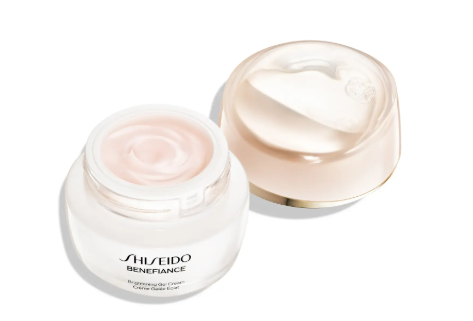
| Product | Shiseido Benefiance Brightening and Wrinkle Smoothing Cream |
| Best for | Sensitive or reactive skin dealing with dark spots and wrinkle texture simultaneously |
| Key ingredients | Picão Preto Extract, Niacinamide, 4MSK, ReNeuraRED Technology |
| Texture | Lightweight cream, absorbs quickly |
| Use | Morning and evening, last step in routine |
| Price | Around $95 for 1.69 fl oz (check current Amazon listing) |
| Where to buy | Amazon → |
| Patch test | Recommended before first use, especially for sensitive skin |
My shelf had accumulated the evidence of a certain kind of optimism. A bakuchiol serum I’d used for three months with modest, quiet results. A niacinamide toner that helped with tone but didn’t touch texture.
A retinol I’d tried twice, abandoned twice — the peeling, the dryness, the morning-after tightness that felt like my skin was apologizing for something it hadn’t done wrong.
What I wanted was simpler. One last step. Something that addressed more than one thing — and that I could use in the morning without reaching for the photosensitivity warnings first.
This is the J-Beauty idea of 丁寧 — teinei — and it’s the lens through which I look at almost everything now. It doesn’t mean minimalism for its own sake. It means careful, unhurried attention — choosing the right thing and applying it well, rather than layering a dozen things and hoping.
丁寧 is not about making skincare slower — it’s about making it deliberate. There’s a difference, and the difference matters more than I expected.
Shiseido has been doing this since 1872. Their research team maps formulas to a six-step J-Beauty routine — not to sell you six products, but because they think carefully about where in the sequence each ingredient does its best work. The Benefiance Brightening Cream is built to be last. What goes under it sets the stage. This cream seals it — and quietly gets to work.
What’s Actually in This Cream — Ingredients, Honestly Explained
The problem most brightening creams don’t solve
Dark spots and wrinkles often arrive together, but their mechanisms are different enough that treating one can aggravate the other.
Retinol has well-documented effects on cell turnover and collagen support — confirmed across multiple lines of research — but retinoid dermatitis can trigger or worsen post-inflammatory hyperpigmentation in reactive skin, as dermatological literature on retinoid use notes. Vitamin C brightens, though many women with reactive skin find it can cause a stinging sensation. Most brightening formulas skip wrinkle support. Most wrinkle creams don’t touch pigment.
The woman searching for “something for dark spots and wrinkles, sensitive skin” is not being picky. She’s asking a formulation question the market hasn’t answered well. This is the gap the Benefiance Brightening Cream is designed for.
Picão Preto Extract — the plant-based retinol alternative
Picão Preto (Bidens pilosa) is a plant used in traditional medicine across South America and parts of Asia. In skincare, it functions as a retinol alternative — laboratory research published in PMC suggests that the extract activates similar cellular receptors to retinol and may support collagen synthesis, though effects were generally less pronounced than with retinol itself. A more recent human clinical study found that a formula containing Bidens pilosa extract improved the appearance of wrinkles, elasticity, and hydration without retinol’s irritation side effects.
The key word is alternative, not equivalent. The evidence base is still developing. What it offers in return: morning and evening use, no sun-sensitivity restrictions, no adjustment period. For a cream designed as a daily final step, that’s a meaningful practical difference.
Patch test recommended before your first use, especially if your skin has been reactive to actives recently.
Niacinamide — for uneven tone that’s been building for years
Niacinamide is one of the ingredients I trust without much argument. A comprehensive PMC review found that topical niacinamide supports barrier function, inhibits the pigmentation process, and reduces the progression of skin aging and hyperpigmentation. A 12-week clinical study on skin tone and texture found significant improvements in hyperpigmented spots, fine lines, and texture with 5% niacinamide compared to placebo.
The tolerance profile is gentle and it works on several things at once.
For skin navigating hormonal shifts — where research shows estrogen can directly stimulate melanin synthesis in melanocytes, contributing to unpredictable pigment — niacinamide is a steady, non-dramatic ally. It doesn’t work fast. But three months of consistent use, in the right formula, is a different conversation than one month of something aggressive.
4MSK — Shiseido’s proprietary brightening ingredient
4MSK (4-methoxysalicylic acid potassium salt) was approved by Japan’s Ministry of Health, Labour and Welfare as a quasi-drug (医薬部外品) whitening active in 2003. Out of roughly 20 brightening actives approved in Japan, five were developed by Shiseido’s own research team. 4MSK is one of them.
The mechanism: 4MSK inhibits tyrosinase activity — the enzyme that triggers melanin production. When skin is exposed to UV radiation, hormonal fluctuations, or inflammation, melanin production can accelerate, and research on pigmentation pathways suggests that when turnover slows, that melanin accumulates rather than shedding.
According to Shiseido’s own research, an internal study compared 4MSK with arbutin — a well-established brightening active — and measured stronger suppression of UV-induced pigmentation with 4MSK. The full methodology is not publicly available, and independent replication would strengthen this evidence base. But the mechanistic rationale is sound, and the quasi-drug regulatory approval adds weight that most over-the-counter brightening claims don’t carry.
ReNeuraRED Technology — the supporting cast
This proprietary complex combines caffeine, Ashitaba (明日葉, Angelica keiskei), and ginseng root extract.
Ashitaba has been valued in traditional Japanese wellness contexts for generations, particularly in the Izu Islands. Research on the plant focuses primarily on oral use, and its role in topical skincare is still early. Caffeine in topical formulas is associated with microcirculation support — in vitro research has shown that caffeine increases dermal microcirculation flow. Ginseng root is associated with antioxidant properties and has long been used in East Asian skincare traditions, though topical evidence is still emerging.
I think of this technology as infrastructure — the kind of ingredient combination that helps everything else do its job more consistently, rather than making a visible promise of its own.
How to Use It — and Why 丁寧 Changes Everything
The Japanese idea of 丁寧 — careful attention as skincare philosophy
Shiseido’s instructions for this cream are unusually specific. Smooth over the face. Take a pearl-sized additional amount, sweep upward along the neck toward the jaw. That upward motion is not arbitrary — it reflects a J-Beauty understanding that how you apply skincare affects how it performs.
I used to squeeze out cream and rub it in quickly, the way you’d apply hand lotion before walking out the door. I don’t think it was harming anything. But it wasn’t the ritual, either.
Morning — the 30-second final step
Apply after cleansing, any toner, and serum. Smooth a small amount across the face. Add a pearl-sized amount for the neck, sweeping upward to the jaw. The cream absorbs quickly and doesn’t pill under SPF. Daily sunscreen is still recommended — not for photosensitivity reasons specific to this formula, but because SPF is the most reliable support for any brightening work happening underneath.
Evening — how to layer it with what you already use
Same sequence: cleanse, any actives, then this as the final step. If you’re using a separate niacinamide serum, layering is generally fine — niacinamide has a wide tolerance range for most people. Apply this cream last.
Patch test — who should be especially careful
Before full-face use, patch test on the inside of the wrist or behind the ear for 24 hours. If your skin has been particularly reactive recently — barrier-compromised, post-procedure, or mid-hormonal fluctuation — give it 48 hours. The formula contains fragrance components; those with fragrance sensitivity should be especially attentive during the patch phase.
What I’d Tell a Friend: Honest Verdict
How it compares
| Shiseido Benefiance Brightening Cream | Bakuchiol-based moisturizer | Ceramide moisturizer | |
|---|---|---|---|
| Primary strength | Dark spots + wrinkle texture, simultaneously | Wrinkle texture; gentle cell turnover | Barrier repair; dryness; redness calming |
| Brightening ingredient | 4MSK + Niacinamide | Usually niacinamide only | Rarely included |
| Morning use | ✅ No restrictions | ✅ | ✅ |
| Fragrance-free | ❌ Contains fragrance | Varies | Often yes |
| Price range | ~$95 / 1.69 fl oz | $25–$65 typical | $15–$50 typical |
| Best if… | You want one final step addressing both pigment and texture | You want texture support without brightening complexity | Barrier is your first priority right now |
For bakuchiol comparisons in depth, [see this article →]. For ceramide moisturizer options, [see this article →].
Who will get the most from this cream
This is well-suited for skin dealing with both dark spots and texture changes at the same time, where retinol has been too irritating to use consistently. The combination of Picão Preto Extract, niacinamide, and 4MSK covers three distinct mechanisms in a single moisturizer — surface texture, barrier-supported pigment reduction, and tyrosinase inhibition. That’s unusual at any price point.
It’s also a strong fit if J-Beauty formulation philosophy resonates with you — ingredients with documented research, precise application instructions, and a sensory experience that feels intentional.
→ Check current price and availability on Amazon
Who might want to consider something else first
At $95 for 1.69 fl oz, this is not a casual experiment. If your skin is actively irritated or recovering from over-exfoliation, a ceramide-focused moisturizer is a better starting point. Rebuild the barrier first — a brightening formula like this will perform better on stable skin anyway.
If fragrance sensitivity is a known issue, the ingredient list includes fragrance components. The patch test matters more, not less.
And if dark spots are your only concern — not texture — a dedicated niacinamide serum may address pigment more efficiently at a lower price point.
FAQ
Q: Can I use a retinol alternative like this morning and night?
Yes. Unlike retinol, Picão Preto Extract doesn’t carry photosensitivity requirements, so morning use is unrestricted. Shiseido instructs morning and evening application. Daily SPF is still recommended — not because of this ingredient, but because it supports any brightening work happening underneath.
Q: How long before I might notice a difference in my dark spots?
Pigment changes are slow. Most brightening research uses 8–12 week timeframes as the meaningful measurement point. Some women notice improved tone and texture earlier — often within 4–6 weeks — but for visible change in established dark spots, three months of consistent use is the realistic benchmark.
Q: Is this safe for skin navigating hormonal shifts?
The formula is non-comedogenic and formulated for all skin types, including sensitive skin. Niacinamide is particularly relevant here — it supports barrier function and may help steady pigment disruption linked to hormonal fluctuation. That said, skin in the middle of hormonal transition can be unpredictable. Patch test first, introduce on one side of the face for a week before going full-face, and pay attention to how your skin responds.
One Last Thing
If your skin has changed and the products that used to work have quietly stopped — that’s not a signal that you’ve done something wrong. It’s a signal that your skin is doing something different, and it deserves a different response.
This cream is one of the more thoughtfully formulated options I’ve encountered for the specific combination of concerns that come with skin in transition. The ingredients are chosen with intention. The application is simple. The research on 4MSK is more substantive than most brightening claims you’ll find in a moisturizer at any price point.
If you try it, I’d genuinely like to know what you find.
→ Shiseido Benefiance Brightening and Wrinkle Smoothing Cream on Amazon
丁寧に、 不在の間も、肌は働いている。 Carefully, even while you’re not watching, the skin is doing its work.
Author Bio
Hana is a J-Beauty writer based in Japan who spent most of her busiest years too busy to think about skincare — and paid for it in dullness, dryness, and a face that looked more tired than she felt. Now she writes about going slower and choosing better, for women who are finally ready to start.